Travel Cancellation Insurance: When It’s Worth It and What It Covers
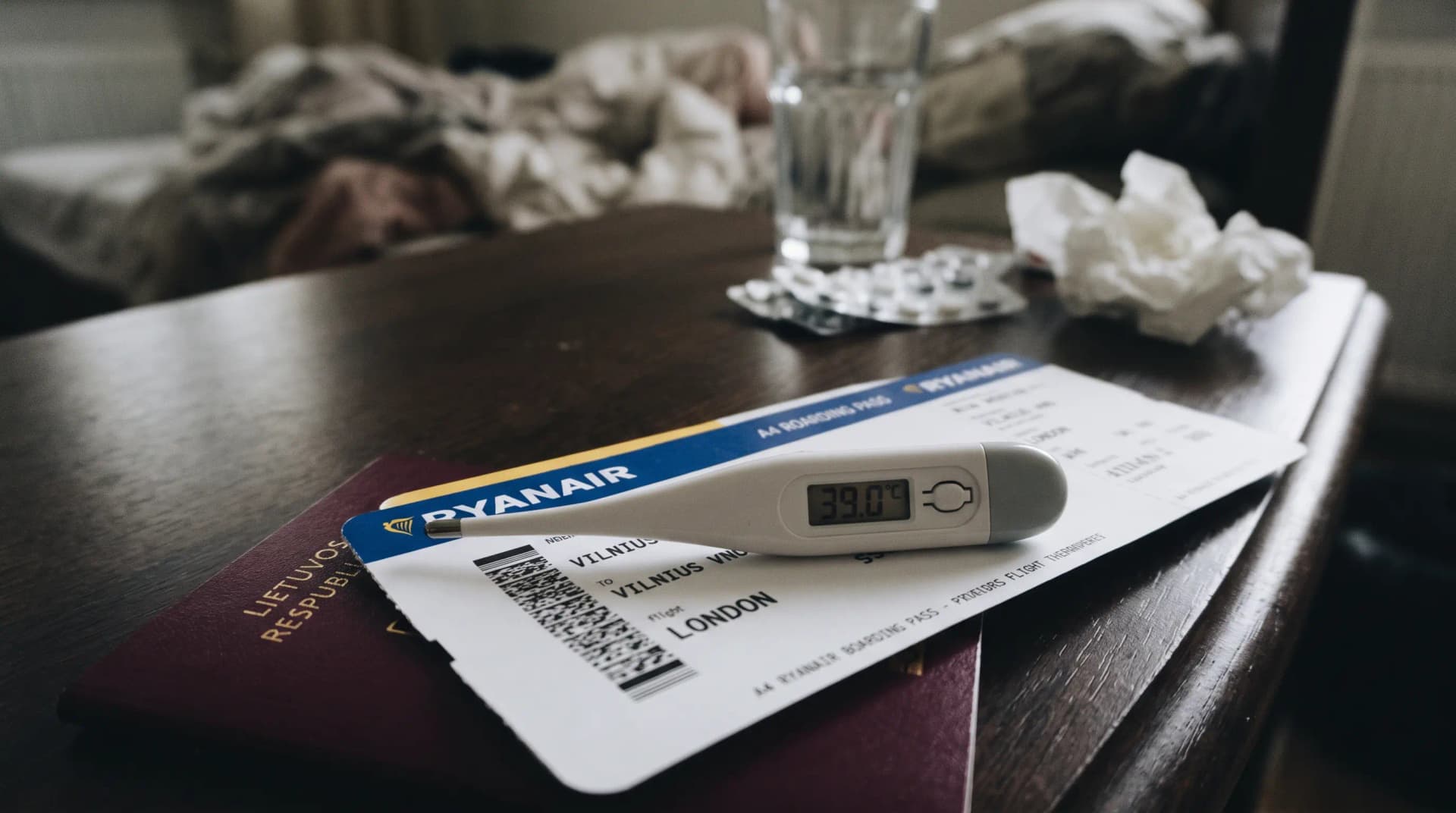
Imagine this: back in January, you bought cheap plane tickets to Barcelona for July, booked a hotel, and paid a deposit. The total cost was about 900 euros. But at the end of June, you break your leg. Or your child suddenly gets sick. The trip is canceled, and no one will refund your money—after all, the tickets are “non-refundable.”
In such cases, many people simply accept the loss. And they don’t even know that travel cancellation insurance exists specifically for situations like this, which, under certain conditions, would cover most of the money lost.
The problem is that no one thinks about this when buying tickets. On insurance websites, it’s often mentioned only as a small checkbox—without any explanation of what it actually covers or when it’s worth buying.
In shortTrip cancellation insurance compensates for the cost of non-refundable tickets, hotels, and tours if the trip is canceled for a valid reason—such as illness, injury, the death of a close relative, or certain work-related circumstances. It’s most worthwhile when you buy tickets several months in advance or when the amounts involved are significant. You must purchase the insurance immediately after making your reservation, not right before departure.
What This Insurance Actually Covers
Trip cancellation insurance (also known as trip cancellation coverage) reimburses you for expenses you incurred before your trip but were unable to recover because you had to cancel your trip.
Simply put, it covers what you’ve already paid for and what the airline or hotel won’t refund.
The following are most commonly covered:
There is one important difference. Cancellation insurance takes effect BEFORE departure. This is not the same as medical expenses abroad or baggage insurance—those cover incidents that occur during the trip. Often, all of this is sold as part of a single travel insurance package, though the terms and conditions vary for each component.
Information: Trip cancellation insurance and medical travel insurance are two different things. The first protects the money you’ve invested in your trip, while the second protects your health during your trip. When choosing a policy, check to see if trip cancellation coverage is included at all.
What reasons are considered valid?
This is the crux of the matter. Insurance does not cover cancellations “simply because you changed your mind.” There must be an objective, documented reason.
Insurers most commonly accept the following:
- Illness or injury. Yours, that of a traveling companion, or that of a close family member. Usually, a doctor’s note is required confirming that travel is not possible. A mild cold won’t cut it here—the condition must be more serious.
- Death or serious illness of a close relative. The death or sudden serious illness of a parent, child, spouse, or other close relative.
- Accidents involving property. For example, a fire or flood at home just before departure that requires your presence.
- Certain work-related circumstances. Unexpected termination (not at your initiative) or vacation canceled by your employer due to an urgent need. However, not all insurers include this reason—it is often an additional condition.
- A court summons or other official obligations that you learned about after purchasing your tickets.
- Denial of a visa—sometimes, if you applied on time and the denial was beyond your control.
Insurance doesn’t cover the trip itself, but rather the money you’ve already spent on it—so its value depends directly on how far in advance and for what amount you purchased your tickets.
And what does insurance almost never cover? Changing your mind, work projects that “dragged on,” a fear of flying, poor weather forecasts at your destination, or simply changed plans. Also—flare-ups of chronic illnesses, if they existed before the policy was purchased and were not disclosed.
When Is It Really Worth Buying?
The short answer is: the earlier you buy your tickets and the higher the amount at risk, the more the insurance justifies its cost.
Let’s look at the logic. If you buy tickets just a few days before your trip, the risk window is very short—it’s rare for anything to happen in that short time. But if you buy tickets for July back in January, you still have half a year left before your trip. Anything can happen in that amount of time.
A few dozen euros
Typical cost of trip cancellation insurance (depends on the trip’s value and the insurer)
A few months
before the trip—the period when the risk is highest and the insurance is most valuable
From a few hundred euros
of the trip’s value—losses become noticeable starting at this amount
Insurance is most worthwhile in the following cases:
- you purchased your tickets and hotel several months in advance;
- the total amount of non-refundable expenses is high (family trip, long-distance destination);
- you’re traveling with children or older adults (higher risk of illness);
- your work schedule is unstable, and your vacation may be canceled;
- you have chronic health conditions (you must declare them).
Conversely, if you’ve purchased a refundable ticket or a hotel with free cancellation up to one day in advance, separate cancellation insurance may not be necessary—you already have that flexibility.
Calculation Example
Let’s look at a specific example to make it clearer whether it’s worth the trouble. A family trip to Spain—two adults and one child.
| Cost |
Amount |
| Airfare (non-refundable) |
720 € |
| Hotel deposit |
260 € |
| Pre-booked tours |
90 € |
| Total non-refundable amount |
1,070 € |
Cancellation insurance for this trip would cost several dozen euros, depending on the insurer and the value of the trip.
Scenario: Four days before departure, a child falls ill, and a doctor prohibits them from flying.
|
WITHOUT insurance |
WITH insurance |
| Amount lost |
~1,070 € |
Partial or full reimbursement (a deductible may apply) |
Potential benefit—a large portion or the entire non-refundable amount, depending on the policy terms and the applicable deductible.
| Criteria |
Cheaper policy |
More expensive policy |
| Price |
Lower |
Higher |
| Deductible |
Higher |
Lower or 0% |
| Work circumstances included |
Often not |
Often yes |
| Compensation threshold |
Lower |
Higher |
| Required documents |
Certificates |
Certificates |
Compare insurance prices in just a few minutes
Draudykle.lt will help you compare offers from the most popular Lithuanian insurers and purchase insurance online.
Compare prices →