🏗️ Construction (CAR) Insurance
Construction (CAR) insurance protects the structure under construction, materials, and civil liability against fire, theft, and natural disasters. This is a mandatory requirement when building with a bank loan, ensuring financial security in the event of unforeseen disasters.
Palyginti kainas dabarPatikimi draudimo partneriai
What Is Construction (CAR) Insurance, and Who Is It For?
Construction insurance, also known as all-risk construction and installation insurance (Eng. Contractor's All Risks – CAR) is a specialized type of insurance designed to protect a construction site and everything that takes place there, from the start of work until its completion.Although many people associate the word “insurance” only with fire or theft, construction insurance is much broader. It is essentially “all-risk” coverage, except for those risks that are explicitly excluded. This means that the insurance covers losses incurred due to any unexpected and sudden event that is beyond your control. This insurance is intended for everyone involved in the construction process:
For the client (you, if you are building a house or renovating a building).
To the contractor (construction company).
To the bank (if a loan is taken out for construction).
If a bank is financing your project, it will always require construction insurance, as this is the only way to ensure that the property being financed will not suffer irreparable damage before it is completed.
What Does Construction Insurance Cover? (Not Just the Building)
Construction insurance covers three main aspects, and only one of them is the building itself.
The Structure Itself: This is the most obvious part of the security system. Construction insurance provides protection a building under construction—from the poured foundation to a partially completed roof. Risks include fire, explosion, natural disasters (storms, floods), vandalism, and theft.
Construction Equipment and Materials: This includes expensive machinery that is essential to the construction process—excavators, cranes, formwork, and generators—as well as construction materials that have already been delivered to the site and are waiting to be installed (e.g., windows, bricks, and insulation).
Third-Party Liability: This aspect is extremely important but is often overlooked. If damage is accidentally caused to a neighbor’s property during construction (e.g., a crane scrapes the roof, dust damages the facade) or to their health, the civil liability portion covers these losses, protecting you from significant legal costs and claims.

When Should You Consider Construction Insurance?
If you’re an individual building a house on your own, it might seem like you have everything under control. However, the reality is that most of the risks on a construction site depend on the environment. What will you do if your half-built house (in which you’ve already invested a significant amount) suffers major fire damage due to an electrical failure? Construction insurance allows you to stop worrying about such financial disasters. You’re already responsible for the project’s success—let insurance take on the financial responsibility for unexpected setbacks.
Are you hiring a contractor or a construction company?
Although a professional contractor should have their own liability insurance, it rarely covers all possible risks, especially damage to the structure itself. In addition, banks (if you are taking out a loan) require that construction insurance be taken out to protect their mortgaged property, which is still under construction. For you, as the client, peace of mind is paramount—knowing that if something happens, the project won’t be halted due to a lack of funds for repairs. Before signing a contract with a contractor, carefully verify who is responsible for obtaining this insurance.
What Kinds of Unexpected Situations Can Construction Insurance Help You Avoid?
This type of insurance works best when something completely unexpected happens. Here are a few realistic examples of why construction insurance is indispensable:
Natural Disasters: Storms are becoming increasingly common in Lithuania, causing significant damage. Strong winds can knock down scaffolding, collapse an unfinished masonry wall, or blow away part of an already installed roof. This damage would be covered.
Crime and Vandalism: Construction sites are particularly attractive to thieves. Expensive building materials (e.g., copper pipes, heat pumps) can be stolen overnight. There is also a risk of vandals damaging the unfinished facade. Construction insurance covers these losses.
Human Error During Construction: Unfortunately, human errors do occur in construction. A worker may accidentally damage utility lines, incorrectly install a large and expensive structure that must be dismantled, or cause a short circuit. Insurance covers both the restoration and dismantling costs.
Neighbors’ Property: Workers accidentally damage an adjacent fence or a neighbor’s garage while erecting structures. In this case, the civil liability coverage kicks in to cover damages to third parties. Without construction insurance, you would be responsible for the entire financial burden.

How to Choose the Best Construction Insurance Policy?
The construction market itself is complex, and insurance policies vary from company to company. For this reason, it is essential to pay attention to several key aspects.
What Are the Key Aspects of Insurance to Keep in Mind?
Insurance Amount: It must correspond to the total value of the construction project, including materials, labor, and equipment. If you underinsure the project, the insurer will compensate for losses only on a pro-rata basis (so-called insufficient insurance risk).
Deductible: This is the portion of the loss that you cover yourself. For example, if the damage amounts to 5,000 EUR and the deductible is 500 EUR, the insurer will pay 4,500 EUR. The lower the deductible, the more expensive the policy.
Insurance Coverage Period: It is essential to estimate the actual construction timeline and add at least a few extra months to account for unforeseen delays. In addition, reliable construction insurance should also cover the post-construction warranty period (usually 12 months), when the property is already in use.
Why Is It Worth Comparing Insurance Policies on Draudykle.lt?
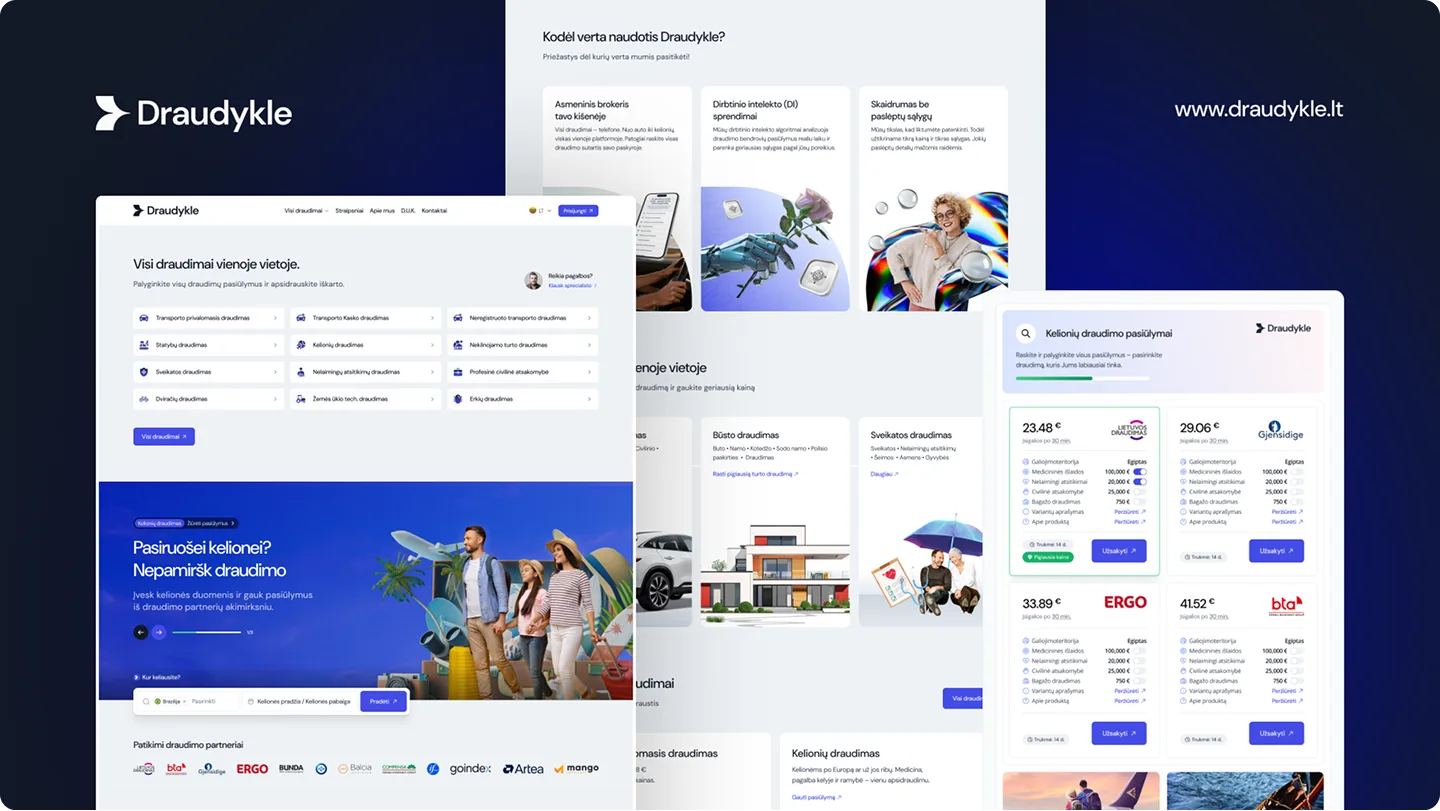
On the Draudykle.lt platform, we streamline and simplify this process. You no longer need to call a dozen different insurance brokers or navigate complicated websites. We operate under a UADBB (insurance brokerage company) license supervised by the Bank of Lithuania, so you can trust us to be reliable and professional.
Transparency and Savings: You can view all construction insurance quotes—including prices and terms—in one place. You can immediately compare which companies offer the best prices and the lowest deductibles.
Efficiency: Our automated system allows you to receive quotes faster than a broker working manually, which means you can make a decision quickly and get back to work.
Reliability: We provide only accurate and legally correct information to help you make an informed decision.
Frequently Asked Questions About Construction Insurance
Is construction insurance mandatory in Lithuania?
Construction insurance is not required by law to everyone for individuals, but it becomes mandatory if the construction is financed by a bank loan. In addition, it is de facto It is mandatory for large commercial and public projects, but in any case, drawing up such a contract is always the best financial decision for any client.
What is the difference between Construction and Home Insurance?
These are completely different types of coverage. Homeowners insurance protects a house that has been built, completed, and is already in use. Construction insurance, on the other hand, is valid only during the construction process—from the start of work until the building is handed over for use. Important! If you have completed construction and begun using the property, you must switch from construction insurance to standard home insurance.
Does construction insurance cover a contractor's bankruptcy?
No. Construction insurance covers only losses resulting from unexpected and sudden an event (e.g., fire, storm, accident). It is not financial insurance and does not protect against financial risks such as a contractor’s bankruptcy, delays in performing work, or poor-quality work. Other guarantees and legal contracts are required for that.
How long does it take to receive a construction insurance quote?
Using the traditional method, this can take anywhere from a few hours to a few days, as it requires collecting a lot of data and sending out requests. However, on the Draudykle.lt platform, once you’ve entered all the necessary project details, you can view and compare quotes very quickly.
Check the Price Now and Place Your Order Safely!
Don’t let a single unexpected accident at a construction site destroy your financial stability and delay the construction of your dream home. Construction insurance is an essential tool that allows you to manage risk.
Don't waste valuable time calling and explaining your project to each insurance company individually. Find out how much construction insurance costs for your project right now – Get insurance quotes in just a few minutes on the Draudykle.lt platform.