Comprehensive Motorcycle Insurance: When Is It Worth It?—The Numbers Speak for Themselves
Comprehensive Motorcycle Insurance: When Is It Worth It?—The Numbers Speak for Themselves
A guide to buying motorcycle comprehensive insurance online, with an analysis of the numbers: theft statistics, prices based on value, and a clear answer to when comprehensive insurance pays off.
Edvinas Radinis • 2026-04-03
Third-Party Liability Insurance
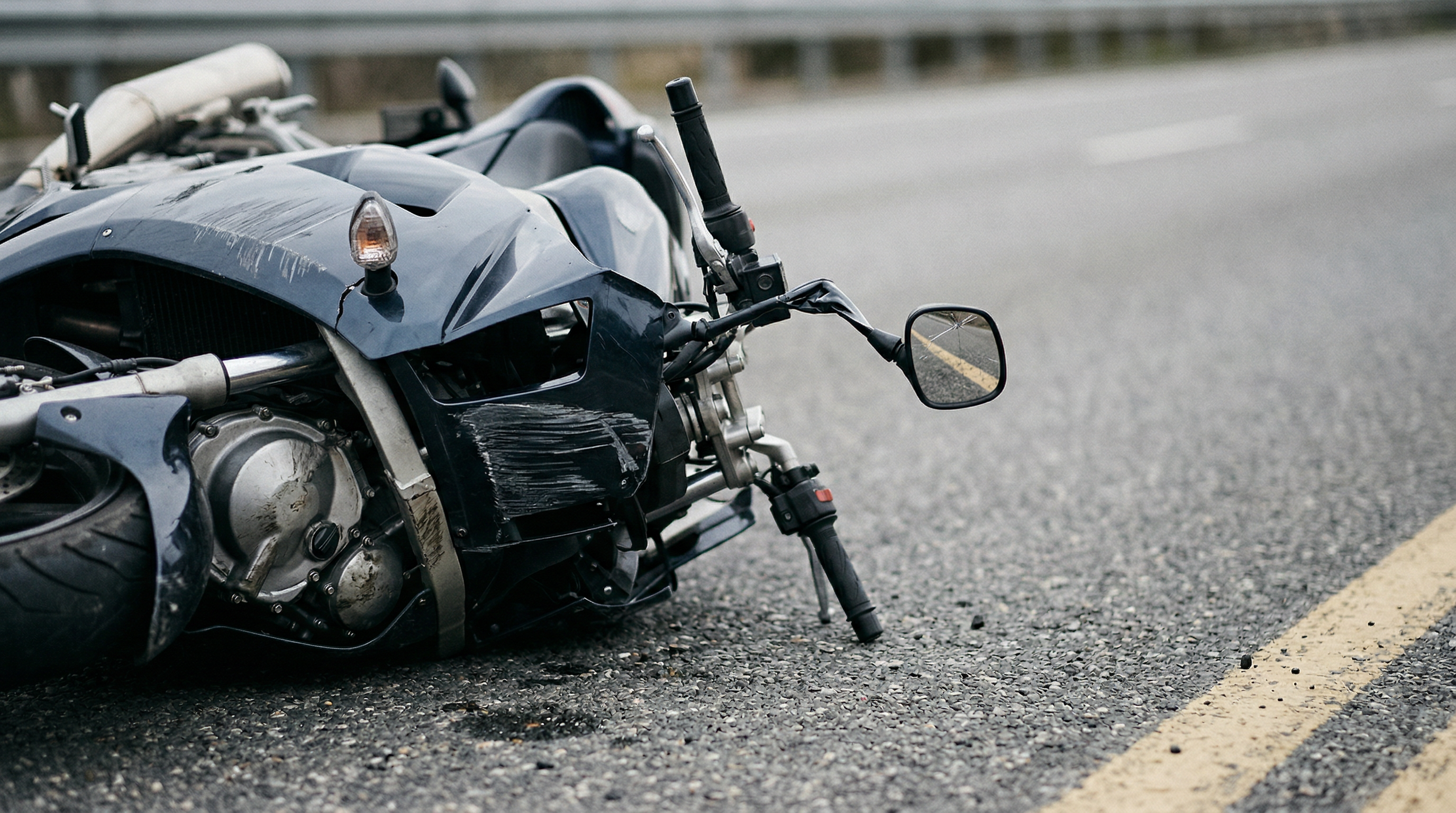
A sunny April morning. After a long winter break, you finally pulled your motorcycle out of the garage, started the engine, and felt that familiar vibration beneath you. The road is clear, and you’re in a great mood. A turn. Gravel. The motorcycle is on its side.
The driver is alive, with a few scrapes. The motorcycle sustained €3,800 in damage.
If you had comprehensive insurance, the insurance company took care of the problem. If you didn't, your bank account took the hit.
That's the whole difference. But is comprehensive insurance really necessary for everyone? Is it financially sensible for everyone? The numbers provide the answer.
What is comprehensive insurance, and how does it differ from liability insurance?
Before we get into the numbers, let's quickly clear up a common misconception that many motorcyclists have.
Civil Liability (CA) – This is mandatory insurance that every motorcycle on the road must have. It covers damage you cause others – to their vehicle, property, or health. As for your own motorcycle—nothing.
Motorcycle Accidents in Lithuania—The Trend Is Getting Worse
The year 2024 brought a paradox to Lithuanian roads: the total number of fatalities fell by a quarter—which is encouraging. However, the situation among motorcyclists is exactly the opposite.
Compared to the average for 2021–2023, The number of injured motorcycle and moped riders rose by as much as 30%. And here's another alarming fact: 36% of all injured motorcyclists were novice riders.(Transport Competence Agency, 2024)
When do accidents most often occur? The data shows that the most dangerous months are May and September – the start and end of the season. The insurance company "Gjensidige""According to the data, the highest number of traffic accidents involving motorcyclists in 2024 was recorded during these specific months. The reason is simple: after a long break, drivers tend to have forgotten their skills, and motorists are not used to seeing motorcycles on the road.
And here's another figure from the same company: Over the course of four years, insured motorcyclists were involved in 462 traffic accidents, and the total amount of claims paid reached 645,000 euros – an average of about 1,400 € per incident.
The motorcycle market in Lithuania is growing
The number of newly registered motorcycles in Lithuania is steadily increasing. In 2025, 13% more new motorcycles were registered than in 2024. – 2,041 and 1,805 units, respectively ("Regitra," 2025). The most popular manufacturers are CFMOTO, Honda, and BMW.
This means there are more and more new, more expensive motorcycles on the roads. And a more expensive motorcycle poses a greater financial risk.
When Is Comprehensive Auto Insurance Worth It?
There is no one-size-fits-all answer here, but there are clear situations in which comprehensive auto insurance economically viable.
1. The motorcycle is new or expensive
The threshold at which comprehensive insurance begins to pay for itself is approximately 5,000–6,000 € market value of the motorcycle. If a motorcycle is worth €9,000 and comprehensive insurance costs €400 per year, you’ll pay €2,000 over five years. One serious crash or theft, and the insurance has already more than paid for itself.
A simple calculator:
Value of the motorcycle: 8,000 €
Comprehensive insurance cost: ~350–450 €/year
Average repair bill after an accident: €1,400–4,000
In the event of theft: the entire motorcycle
Is it worth the risk?
2. You drive in the city often
City traffic means minor damage, traffic jams, unnoticed obstacles, bicycles, and pedestrians. The likelihood of sustaining minor but annoying damage in the city is incomparably higher than on a highway. And when you add up all these “minor” damages, they can amount to a substantial sum.
3. You are a beginner (with up to 3 years of experience)
The statistics speak for themselves. 36% of all injured motorcyclists in Lithuania are beginners. This isn’t a criticism—it’s simply physics: less skill, less intuition on the road. If you’re a beginner, comprehensive insurance isn’t a luxury—it’s a smart decision.
4. The motorcycle was purchased through a lease
Most banks and leasing companies require comprehensive insurance as a mandatory condition. If you purchased a motorcycle with financing, comprehensive insurance is likely already required under the contract.
5. There is no garage
A motorcycle parked outdoors is significantly more vulnerable—to theft, vandalism, and the elements. If a motorcycle is parked in the yard or next to the house at night, there is a real risk of theft.
6. You're planning trips around Europe
When you're far from home, damage automatically becomes a major problem. Even if your insurance covers third-party liability (CA) for damage to others, arranging for repairs to your motorcycle in another country without comprehensive coverage can turn into a nightmare.
When is comprehensive insurance NOT WORTH IT?
There are situations where comprehensive insurance really isn't worth the cost—and it's worth acknowledging that openly.
1. The motorcycle is old and of little value
If a motorcycle is worth €1,500–2,500 and comprehensive insurance would cost €300–400 per year, the numbers just don’t add up. Over the course of a few years, you’ll end up paying as much as the motorcycle itself is worth. Financially, it makes more sense to simply set that amount aside as a “repair fund.”
Guideline threshold: If comprehensive insurance costs more than 8–10% of the motorcycle's annual value, it's usually not worth it.
2. You don't drive very often
If a motorcycle is ridden 10–15 times per season on short trips, the statistical risk of being in an accident is significantly lower. Fewer kilometers = lower probability = less need for comprehensive insurance.
3. Has a sufficient financial cushion
If you can afford to pay the repair bill out of your savings without significantly affecting your quality of life, you can opt out of comprehensive insurance. The key question is: would damage costing €2,000–4,000 be a financial blow to you today?
4. The motorcycle is stored in a locked garage
If a motorcycle is parked in a secure, locked garage during the winter and at night, the risk of theft is dramatically lower. This eliminates one of the main reasons for needing comprehensive insurance.
5. An old motorcycle that’s hard to insure
Insurance companies are not always willing to insure very old models, especially if it is difficult to determine their market value or if the supply of replacement parts is limited.
When buying comprehensive auto insurance, many people think they’re now protected against absolutely everything. Unfortunately, that’s not the case—and it’s important to know this before signing the policy.
The most common exceptions:
Driving without a valid license category
– If you ride a Category A motorcycle while holding only a Category B license, the insurer may refuse to pay the claim.
Alcohol or Drugs
– No exceptions. If intoxication is determined, the insurance is invalid.
Driving on a Race Track
– Even if it's a private track or a "track day," most insurance policies don't cover it.
Depreciation Calculation
– The insurer pays out the market value, not the replacement value. If the motorcycle is already 3–4 years old, the amount received will be less than expected.
Franchise
– This is the amount you have to pay out of pocket first. For example, if the deductible is €300 and the damage is €800, you’ll only receive €500.
What You Need to Check Before Buying:
When comparing insurance policies, pay special attention to the following points:
What is a deductible, and can it be reduced?
How is the loss assessed—based on market value or replacement value?
Is roadside assistance included?
What is the procedure in the event of damage?
How to Choose Comprehensive Auto Insurance – 5 Practical Steps
Have you decided that comprehensive auto insurance is right for your situation? Here's how to choose the right one:
1. Estimate the market value of the motorcycle today – not the price you paid two years ago, but the current one. Check out the classifieds websites.
2. Get at least 3 quotes – Prices can vary significantly, even for identical motorcycles. Don't settle for the first one you see.
3. Compare franchises – A lower deductible = a more expensive policy, but fewer "surprises" after a claim. Choose based on your financial situation.
4. Review the damage assessment procedure – Is the assessment conducted by the insurer’s expert, or is an independent assessment possible? The difference could be significant.
In short: not for everyone, but for many
Comprehensive insurance isn't a one-size-fits-all solution. It definitely isn't worth it if you ride an old motorcycle only occasionally and can afford to cover the damage yourself.
However, if your motorcycle is expensive, you ride often, you're a beginner, or you simply want peace of mind—comprehensive insurance is a rational financial decision, not just a matter of emotion.
The final question to ask yourself:
If you called your insurance agent tomorrow morning to report a claim, would you rather hear, “We’ll cover it,” or “We’re sorry, but you’re not insured for this incident”?
The numbers speak for themselves. You just have to listen to them.