How to find your VIN quickly
Insurance, registration or vehicle history checks require the VIN — a 17-character number that is unique to each vehicle. This guide covers what a VIN is, where to look for it, why it matters and what to do next.

VIN — the vehicle identification number
VIN (Vehicle Identification Number) is a 17-character code assigned at the factory and valid worldwide. It identifies the vehicle by manufacturer, model, specification, model year and serial number. The VIN is used in insurance, registration, technical inspection, law enforcement and workshop systems.
What is
the VIN code used for?
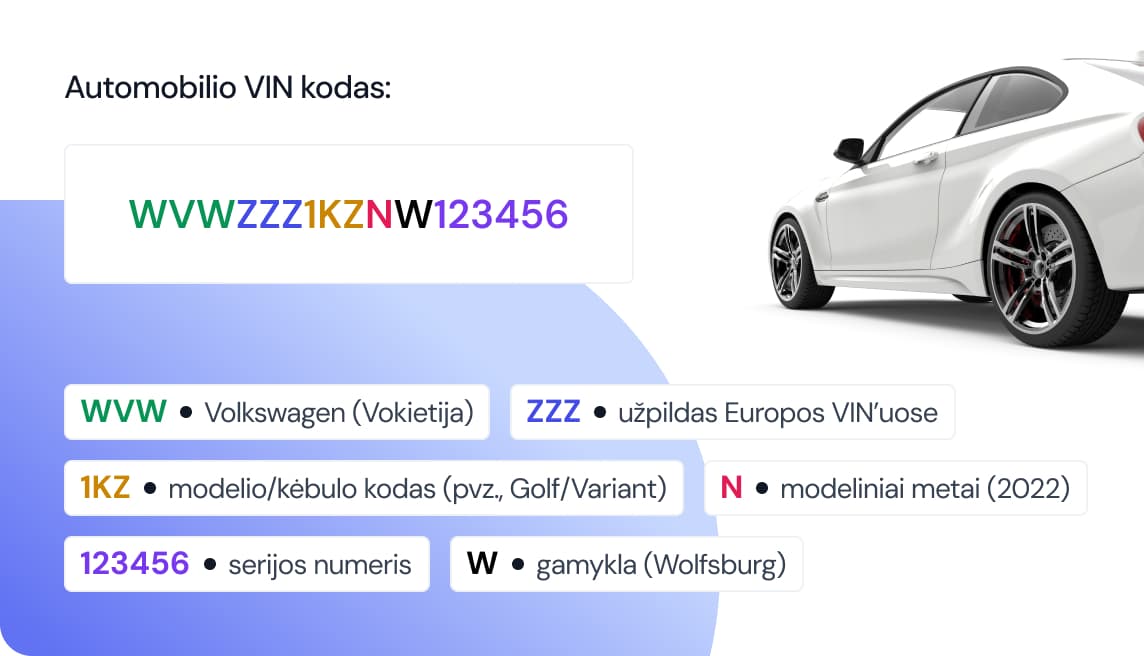
What is a VIN made of?
Usually you simply read and type the VIN, but its structure helps you understand what each character means.
Quick overview:
- Characters 1–3 (WMI): manufacturer and region.
- Characters 4–9 (VDS): model, body type, restraint system code.
- Characters 10–17 (VIS): model year, plant, unique serial number.
What is the VIN code used for?
Registration
Official vehicle registration
Insurance
Issue and deliver a policy
Security
Identify theft and fraud
Parts
Check parts and components
History
Learn mileage, events and other records
Where to find the car’s VIN code?
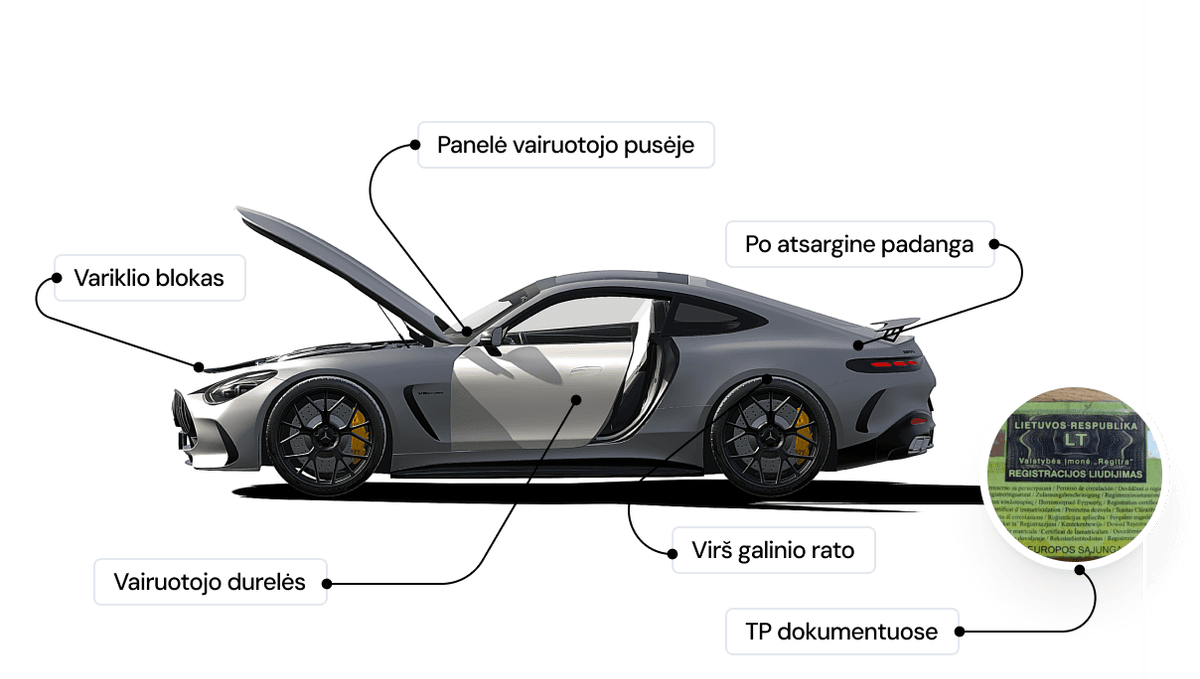
The exact spot can vary by make and model, but the VIN is usually shown in several easy-to-reach places. Below is a short, reliable search order.
Vehicle documents
The easiest route. You’ll find the VIN on the registration certificate, insurance policy and sale/purchase documents. If you’re buying a car, check that the VIN in the paperwork matches the number on the body.
On the dashboard
One of the most common and accessible places is the dashboard. Look for the digits on the driver’s side, near the base of the windscreen. The code is visible from outside the car.
Driver’s door frame
Often the VIN is on the driver’s door. Open it and look for a sticker or metal plate with numbers on the door frame — usually a little below mirror height.
Under the spare wheel
On some models the number is duplicated in the boot, under the spare wheel or in its well. Check here if you can’t find it on the dashboard or door frame.
Above the rear wheel / on body parts
It may be stamped on the body near the rear wheel or elsewhere. You may need a torch and a clean surface.
Other possible locations
Depending on the manufacturer, the VIN may also appear on the gearbox or other body parts — this helps protect against tampering.